|
Director uses actors, projections and props to bring late costume designer back to life
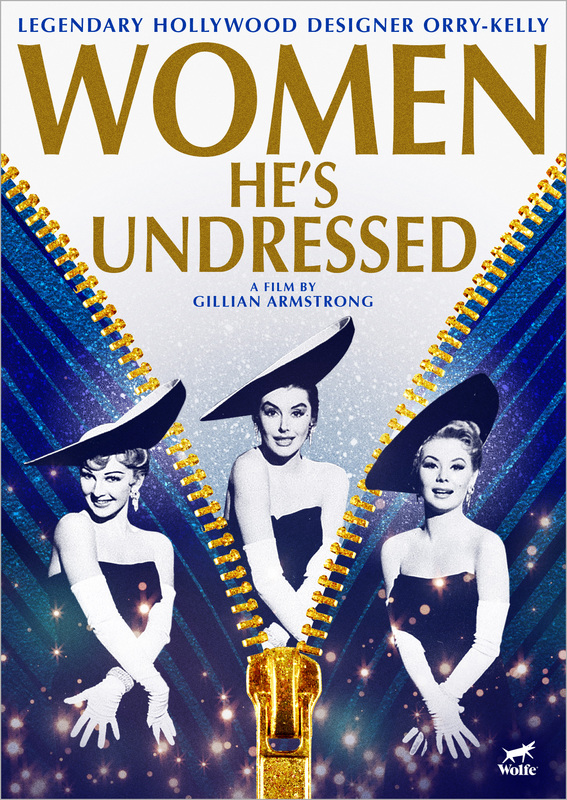
Australian director Gillian Armstrong has helped launch the careers of some of her country's greatest stars: Judy Davis [My Brilliant Career] and Cate Blanchett [Oscar and Lucinda; Charlotte Gray].
She made her name in narrative features, but her latest, Women He's Undressed, is a documentary -- an exploration of one of Australia's greatest film talents from an earlier era, the long-neglected costume designer Orry-Kelly. He was incredibly famous in the 1930s and 40s. Whenever he came back to Australia it was 'our Orry from Hollywood...' Once that golden age faded so did his fame.
The list of women -- and men -- Orry-Kelly costumed during his decades in Hollywood reads like a roll call of screen legends: Bette Davis, Ingrid Bergman, Jane Fonda, Humphrey Bogart, Ingrid Bergman, Natalie Wood, Jack Lemmon, Betty Grable and many more.
He displayed marvelous creativity in his work and daring in his personal life: openly gay at a time when the studios kept most of their "queer" personnel -- those in front of and behind the camera -- in the closet under lock and key.
SHARE THIS:
Women He's Undressed has played theatrically and on cable TV in Australia. The film is released on DVD in North America on Tuesday [August 9]. Nonfictionfilm.com spoke by Armstrong by phone from Sydney, days before her film's stateside DVD debut.
Nonfictionfilm.com: How well known in Australia is Orry-Kelly? Gillian Armstrong: He was incredibly famous in the 1930s and 40s. Whenever he came back to Australia it was "our Orry" from Hollywood... Once that golden age faded so did his fame. Since the successful cinema and cable release of our film and the exhibition at ACMI in Melbourne of his costumes, he's very well known [again]. But before we made the film, nobody [remembered] him. The only people that I came across that did were Catherine Martin and Baz Luhrmann. because Catherine is a costume designer. They were huge fans of Orry's. Nonfictionfilm.com: Do you have a sense of pride of what he achieved as a fellow Aussie? GA: Yes, and also I feel like I've made up for my own shame -- because I didn't know who he was either when the producer approached me [with the project]. So I've set that right.
Nonfictionfilm.com: You take a very bold approach in telling his story -- using actors to play Orry-Kelly, his mother, Cary Grant and others in his life. You don't really do re-creations exactly. It's more like a kind of re-imagining of his life and what he experienced and thought at given times.
GA: I'm glad you were careful with the word "re-creations" because that's what I particularly didn't want to do. I hate those recreations in documentaries which are sort of showing you at the same time some voiceover is telling you. We -- meaning the writer Katherine Thomson and I -- didn't want to have a talking head saying, "Orry-Kelly was very funny." We thought, "You need to understand his sense of humor. You can't just have somebody tell you that somebody’s funny." So it starts from that premise. We needed to hear him say his words... We knew it was risky. It's tongue-in-cheek. It's meant to be.
Nonfictionfilm.com: What's been the response to your approach?
GA: I know it divides critics. Some critics think that's not the right thing to do in a documentary. But I don't think there are rules. Audiences go with it and he becomes Orry which is what we intended. That's what we hoped. It's tongue-in-cheek. It's meant to be... Finally his story becomes hopefully quite emotional, quite powerful. 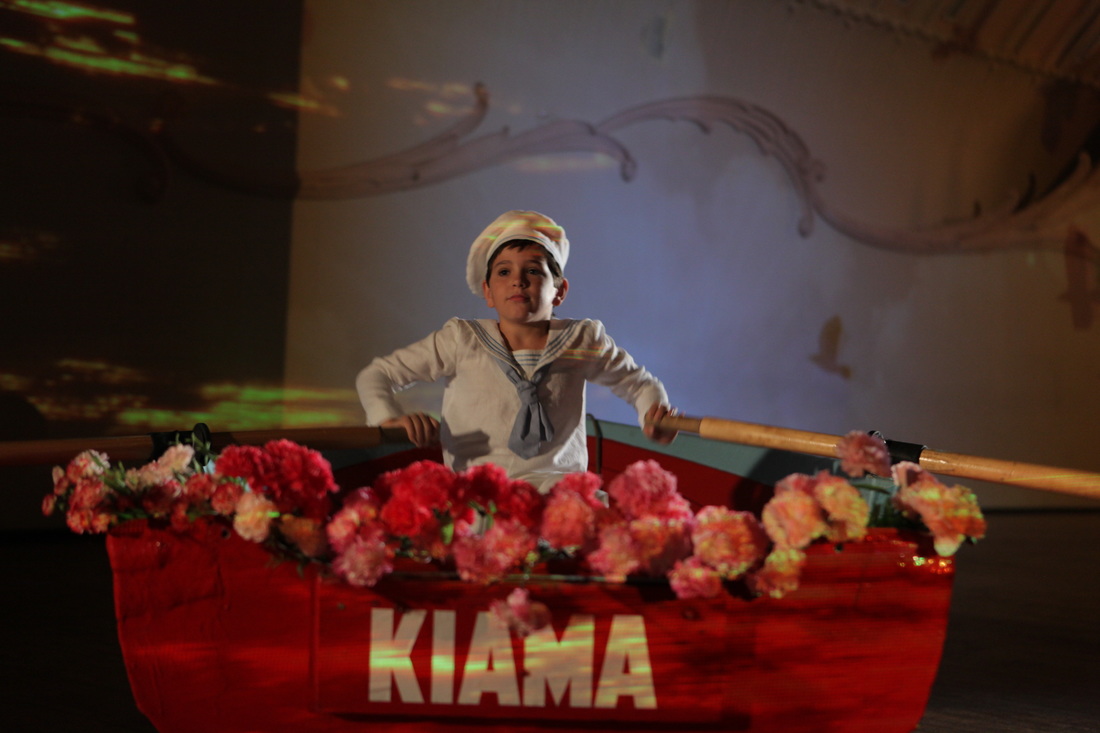
An example of the tongue-in-cheek approach taken by Gillian Armstrong in "Women He's Undressed": a boy plays the young Orry-Kelly. Kiama is the port town where O-K grew up. Photo courtesy Wolfe Video
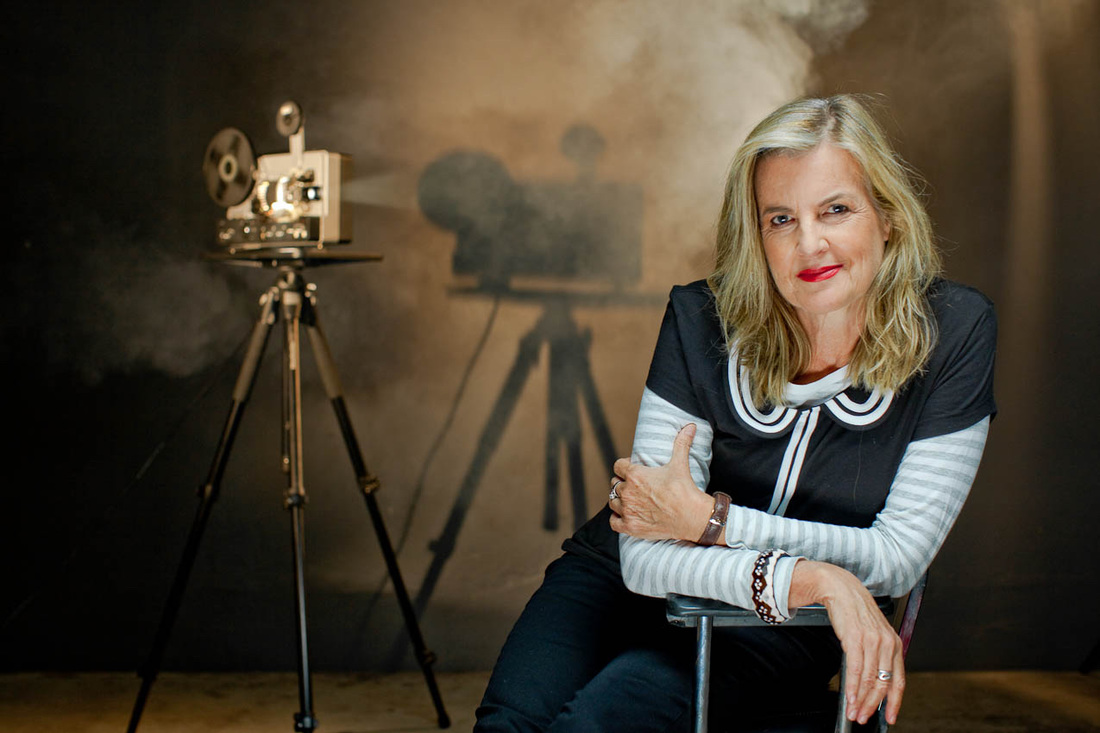
Gillian Armstrong, director of "Women He's Undressed." Photo by Tim Baure/courtesy Wolfe Video
Nonfictionfilm.com: His work is just breathtaking. How great a costume designer was he in your view?
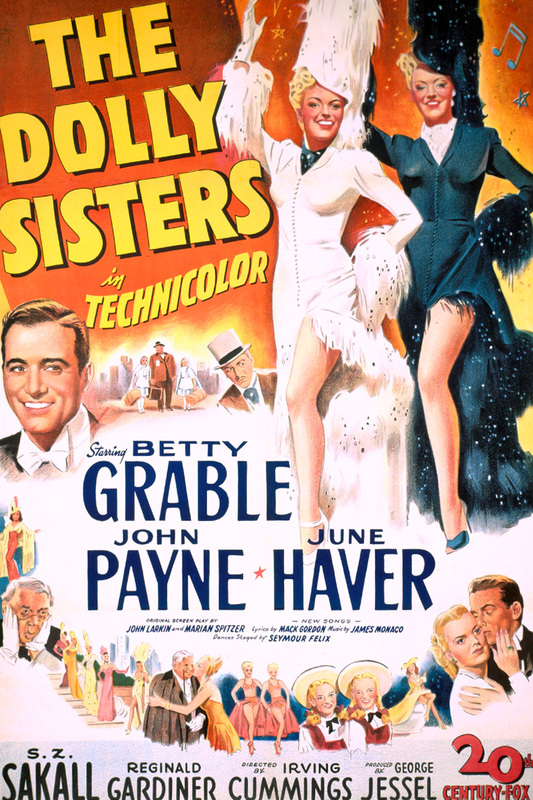
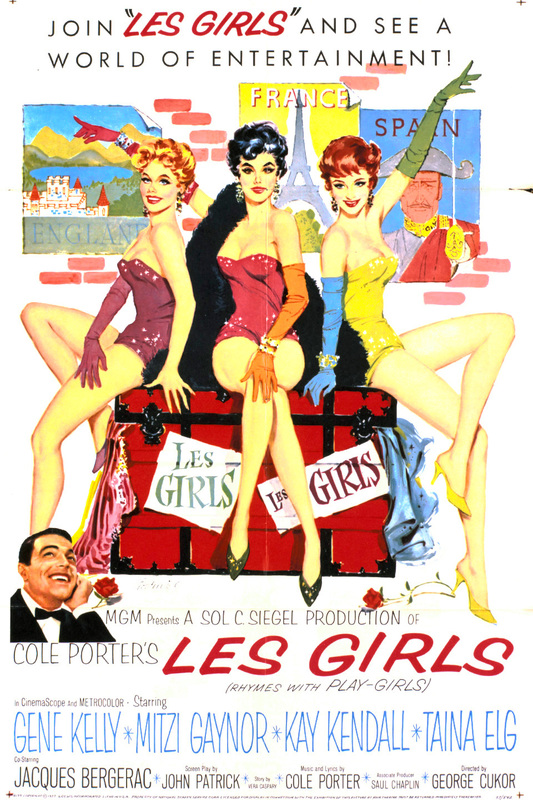
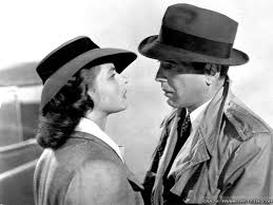
GA: I do think that he is one of the top three all-time -- and a lot of the costume experts and historians that we spoke to agree... I think that he had a fantastic tailor's eye and there is a simplicity. But also he had incredible diversity. He could from something as simple as Casablanca to complete froufrou for the The Dolly Sisters or Les Girls and so on. And to have a career that was that long is pretty unusual in Hollywood where you do go in and out of fashion.
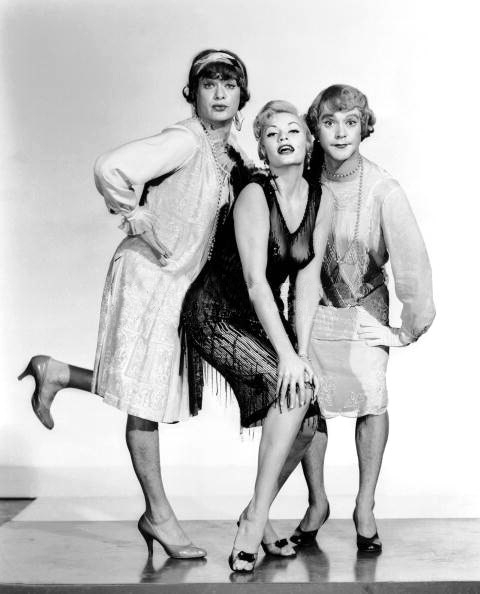
Orry-Kelly designed the dresses for Tony Curtis, Marilyn Monroe and Jack Lemmon in "Some Like It Hot." Image © Metro-Goldwyn-Mayer Studios Inc.
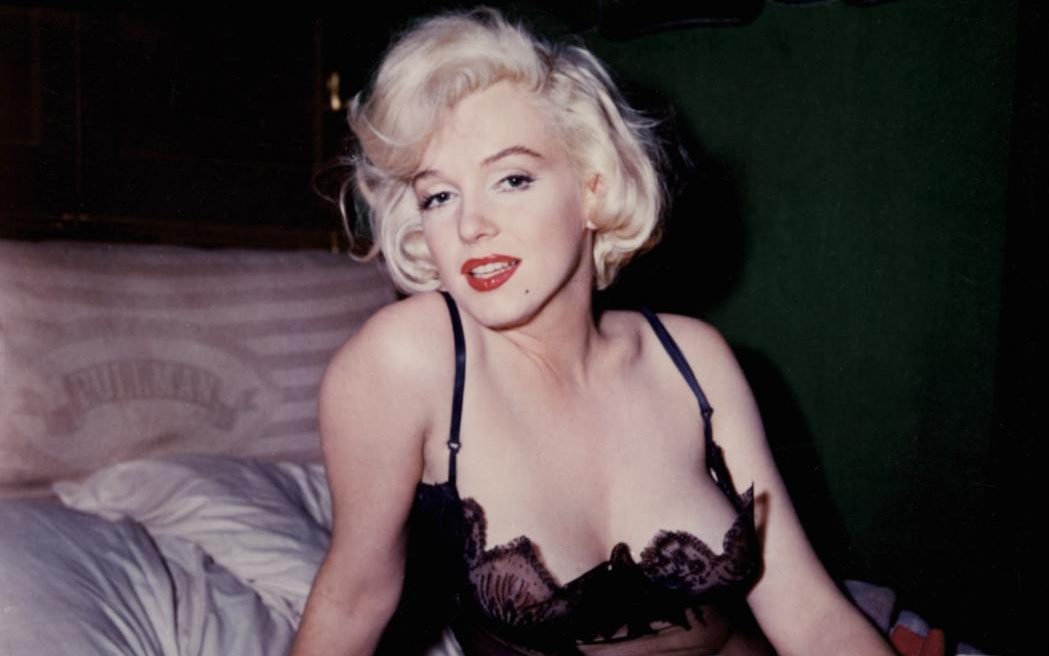
Orry-Kelly spoke of his difficulty working with Marilyn Monroe in his unpublished memoir, "Women I've Undressed." But he knew how to showcase her attributes to best advantage. Image from MGM Studios Inc.
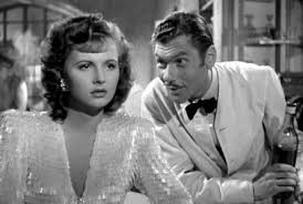
Costumes designed by Orr-Kelly for Casablanca. Images from Warner Bros.
Nonfictionfilm.com: You look at the costume designs from Casablanca -- you would look pretty darn chic if you turned out at a premiere tomorrow night in some of those creations. They have a timeless quality to them.
GA: They do and that really shows someone who has a really classical, understated talent, that he wasn't just chasing the fashion at the time. Some of his designs were definitely ahead of their time and I think that's why they have lasted. 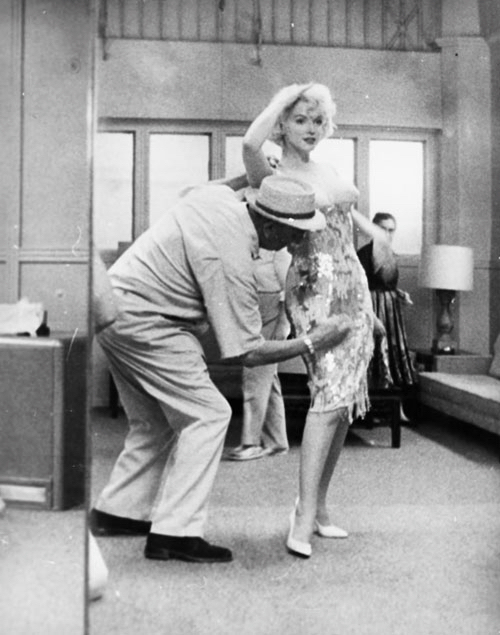
Orry-Kelly puts finishing touches on an outfit for Marilyn Monroe. Photo courtesy Wolfe Video
Nonfictionfilm.com: There is a fascinating subplot in the film -- Orry-Kelly's involvement with the young Archie Leach, later known to all of us as Cary Grant. I want to be clear -- they had a romantic relationship? Is that pretty clear from what you discovered?
GA: In Orry-Kelly's memoir [written] in the 1960s there's a lot about their friendship and their ups and downs. He doesn't ever talk about whether or not they were lovers. I think, number one, Cary had sued a number of people in the past for even hinting in any way that he may be gay. But they lived together in an apartment in New York for nearly nine years... Definitely they were a couple. I do think later on that Randolph Scott was probably the love of Cary's life. And for us the story becomes sort of Orry's hurt at feeling that Cary was going to deny that they even had a friendship and cut him from his life. [Grant] never in any interview or biography ever mentioned ever knowing Orry... Cary did turn up and was a pallbearer [at Orry's funeral]. It said so much about Hollywood and the studio system at that time that you couldn't -- as Orry said in his book -- be true to yourself. There was such pressure on people. 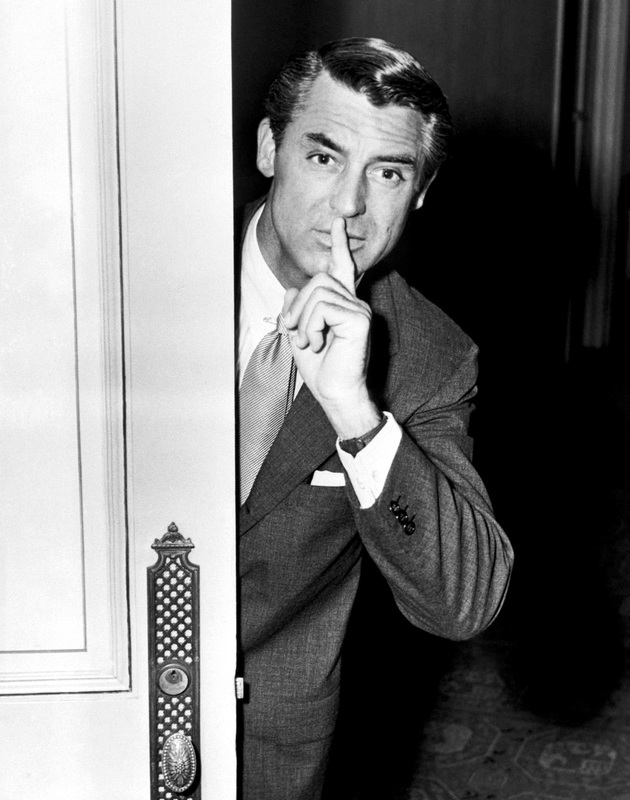
Cary Grant
Nonfictionfilm.com: How brave was Orry-Kelly in being more open than most gay people were at that time? He was himself and he wasn't closeted, in an era when that must been very difficult.
GA: I had no idea there was pressure on costume designers to actually be married and have a wife for the sake of the publicity campaigns -- because the studio wanted to promote their designers too. I do think it was very brave of Orry to refuse to do that and have this sort of sham marriage. 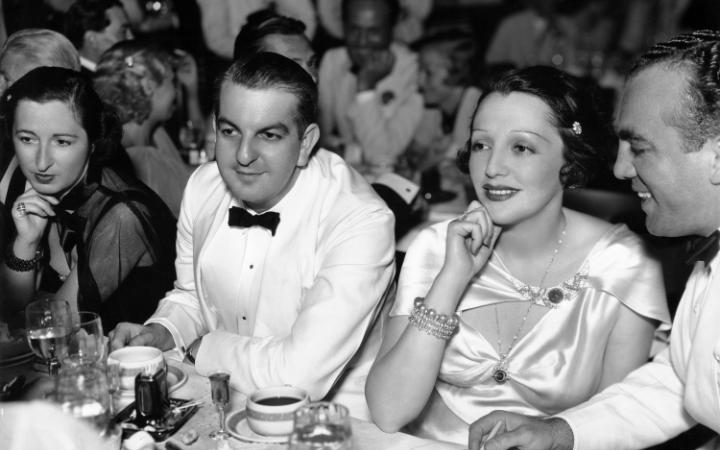
Orry-Kelly [1897-1964], center, with actress Bebe Daniels. Photo: Academy of Motion Picture Arts & Sciences/Margaret Herrick Library
|
AuthorMatthew Carey is a documentary filmmaker and journalist. His work has appeared on Deadline.com, CNN, CNN.com, TheWrap.com, NBCNews.com and in Documentary magazine. |
- Home
- News
- Videos
-
Galleries
- 2019 Tribeca Film Festival
- Full Frame Documentary Film Festival
- 2019 SXSW Film Festival
- SXSW 2018 Gallery
- 2019 Sundance Film Festival
- Outfest 2018 Photo Gallery
- Outfest 2017
- Sundance 2018 Photos
- 2017 LA Film Festival
- 2017 Cannes Film Festival
- Tribeca Film Festival 2017
- SXSW 2017 Gallery
- 2017 Berlin Film Festival
- Sundance 2017 Gallery
- 2016 Los Angeles Film Festival
- Cannes Film Festival 2016
- SXSW 2016 Gallery
- Berlinale 2016 Gallery
- Sundance 2016 Gallery
- Filmmaker Gallery
- About
- Contact
 RSS Feed
Proudly powered by Weebly
- Home
- News
- Videos
-
Galleries
- 2019 Tribeca Film Festival
- Full Frame Documentary Film Festival
- 2019 SXSW Film Festival
- SXSW 2018 Gallery
- 2019 Sundance Film Festival
- Outfest 2018 Photo Gallery
- Outfest 2017
- Sundance 2018 Photos
- 2017 LA Film Festival
- 2017 Cannes Film Festival
- Tribeca Film Festival 2017
- SXSW 2017 Gallery
- 2017 Berlin Film Festival
- Sundance 2017 Gallery
- 2016 Los Angeles Film Festival
- Cannes Film Festival 2016
- SXSW 2016 Gallery
- Berlinale 2016 Gallery
- Sundance 2016 Gallery
- Filmmaker Gallery
- About
- Contact