Now playing: Oscar-shortlisted documentary 'The Silence of Others' on grim legacy of Franco's Spain5/25/2019 Film by Almudena Carracedo and Robert Bahar opens theatrically in LA, held over in New York and San Francisco  "They would leave dead people by the streets. The whole idea was to create terror, and to deter any opposition." This was the brutal reality in Spain under fascist dictator Generalisimo Francisco Franco, who held power from 1939 until his death in 1975. Tens of thousands of his perceived political opponents were murdered during his right-wing rule, many of them tossed into mass graves with no stone to mark where they lay. Spain made a transition to democracy after Franco's passing, but anyone who thinks that brought about a reckoning with the crimes of the regime will have their eyes opened by the documentary The Silence of Others. We felt our greatest challenge...as filmmakers, was to say, 'The suffering that we are bearing witness to is so profound, how can we convey that in a film?' Almudena Carracedo and Robert Bahar directed the award-winning film, which is now playing at the Laemmle Music Hall in Beverly Hills. It has been held over at Film Forum in New York and in the San Francisco Bay Area (Roxie and Rialto theaters). It plays in more cities in the U.S.. in the coming days and weeks (info here). The film explores the far-reaching impact of an amnesty law that Spain's legislature passed in 1977 that was meant to offer a "fresh start" for the country and leave the wounds of "franquisimo" in the past. Codified in the amnesty law was a "pact of forgetting" (el pacto del olvido) which forced a collective amnesia on the Spanish public, eliminating any possibility of accountability for crimes of political repression committed during the Franco years. "There are two ways that countries generally go from dictatorship to democracy. One is a revolution. Just a big rupture. The other is like what happened in Spain. It's sort of a negotiation with the outgoing regime," Bahar tells Nonfictionfilm.com. "Because it happened this way in Spain, there were all of these continuities between dictatorship and democracy. Especially in the judiciary, and in the police, and the military, and the security forces." Among the characters in the film is José María "Chato" Galante, un luchador anti-franquista, who was tortured by Spanish authorities in the late 1960s for daring to support democracy. "You had the generation of '68, this generation like Chato, standing up, and you also had sort of underground union movements standing up," Bahar notes. "There was resistance growing. That paralleled what was happening around the world, and so I think part of what you see is the regime responding to resistance, and trying to clamp it down." Decades later, well into Spain's democratic era, Galante would see the man who had tortured him walk the streets of his Madrid neighborhood with complete impunity. The amnesty law shielded his torturer from justice. Another main character is María Martín, an elderly woman who keeps vigil by a road beneath which lie the remains of her mother, who was eliminated in the early years of Franco's regime. "María Martín's mother was not an activist, or even a 'red,' she was just maybe a free thinker," Carracedo tells me. "[It] was basically a systematic repression, a systematic sort of extermination and repression of not just political opponents, but anyone who dared to think different." Spain's "pact of forgetting" prevented Martín and thousands of people like her from having the remains of their loved ones unearthed, identified and properly buried. "There's still more than a 100,000 bodies buried in mass graves," Bahar states. Carracedo points out ruefully, "[This is] 40 years into democracy." 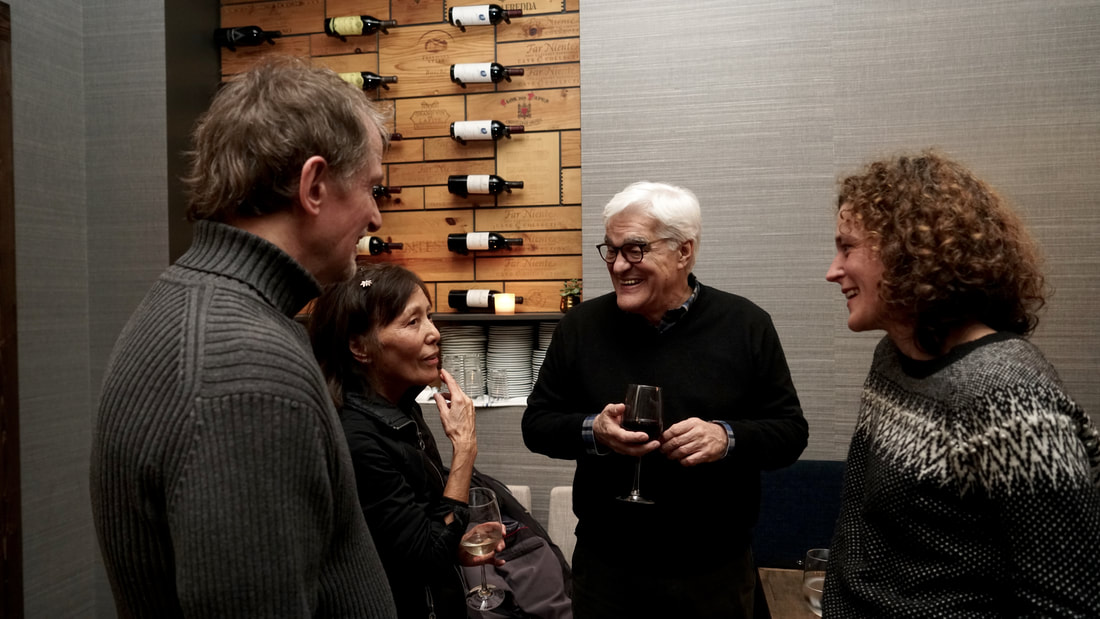 Chato Galante (center), one of the main subjects of "The Silence of Others," attends a reception following a screening of the film in Santa Monica, California. December 5, 2018. Photo by Matt Carey 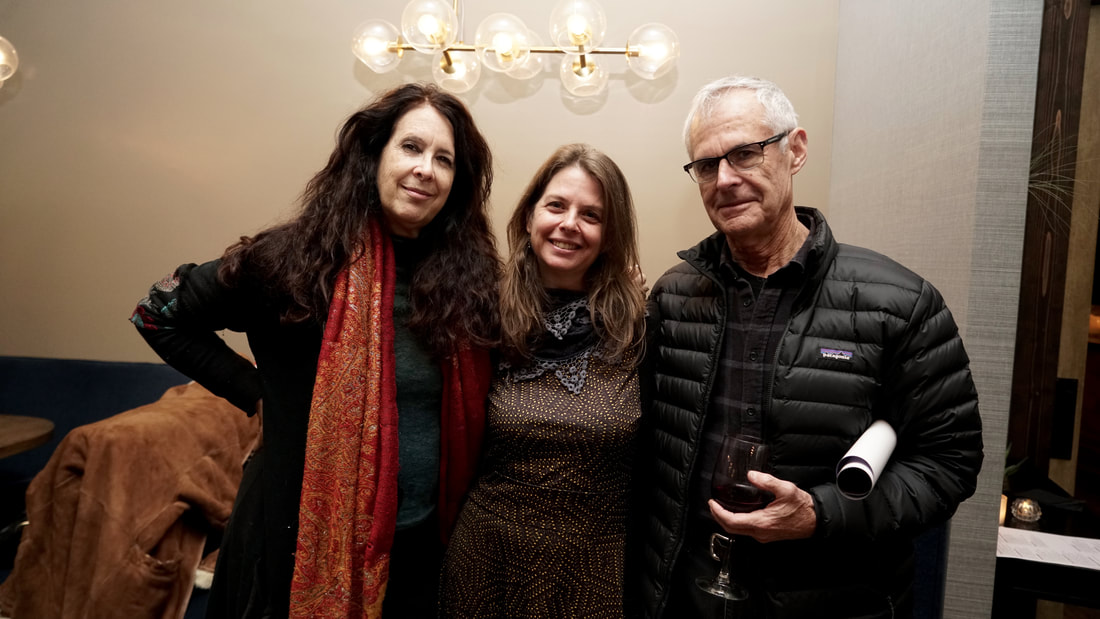 Filmmaker Almudena Carracedo (center), flanked by Lisa Leeman and Alan Barker. Santa Monica, California, December 5, 2019. Photo by Matt Carey The Silence of Others was shortlisted for the Academy Awards and has won numerous prizes, including the Grand Jury Award at the Sheffield International Documentary Festival, two awards at the Berlin Film Festival, the Pare Lorentz Award from the International Documentary Association and Best Documentary at the Goya Awards, Spain's equivalent of the Oscars. More important than awards has been the impact of the film in Spain, where it has caused a public reevaluation of the amnesty law and the "pact of forgetting." Carracedo points to a newspaper article reacting to the film that hints at the potential sea change in Spain: "There was a right-wing newspaper -- and this is always more impressive, when sort of that kind of thing happens -- where they titled their article, 'Shall We Forget the Pact of Forgetting?'" Bahar adds, "The film creates a space where victims and survivors from across Spain can come. There are people who have never talked about what happened to them necessarily, who come to screenings, or who bring their grandchildren to screenings. We did a screening in Seville in an opera house that holds about 500 people. In the central rows, there were a group of people who had brought the photographs of their loved ones, who are still buried in mass graves." 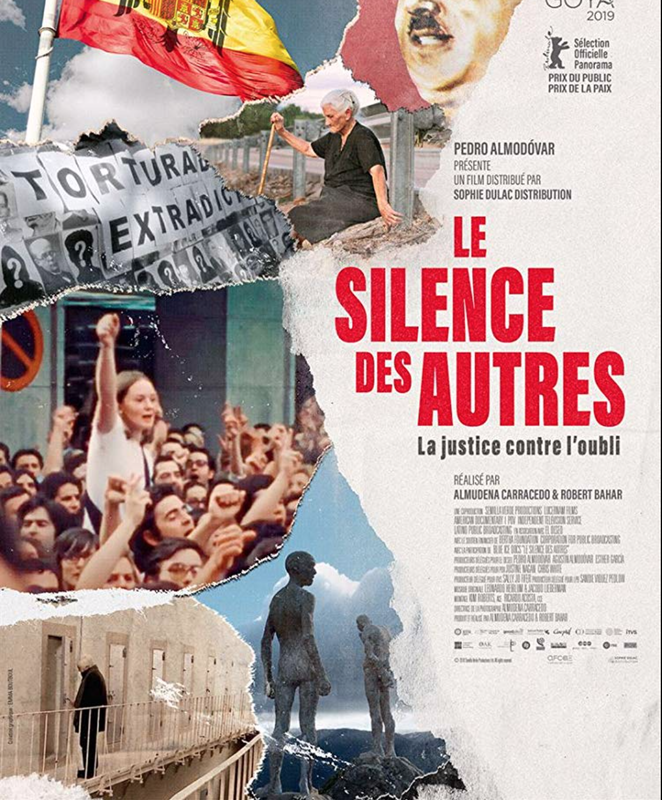 There are many more things to be learned from The Silence of Others beyond what we have touched on here. Perhaps most shocking is a systematic program of abducting babies that went on in Spain both during and after Franco's reign. Another is the role of the United States in propping up the Franco government for decades in the midst of the Cold War -- successive U.S. administrations seeing the Generalisimo as a convenient bulwark against communism. The documentary speaks to today in important ways, particularly with many European countries sliding toward the nationalist right-wing ideology that characterized Franco (the nationalist/populist Vox party made gains in recent elections in Spain). The ascendancy of right-wing nationalist politics, of course, extends well beyond Europe -- to India, Brazil and the United States. Lessons are in abundance in The Silence of Others, about the dangers of fascistic politics, and the consequences for any country that fails to reckon with its past. "When we were in edit, especially, we understood the sort of universality of the subject that we were dealing with," Carracedo comments. "In a way, it is a case study, or like a cautionary tale." 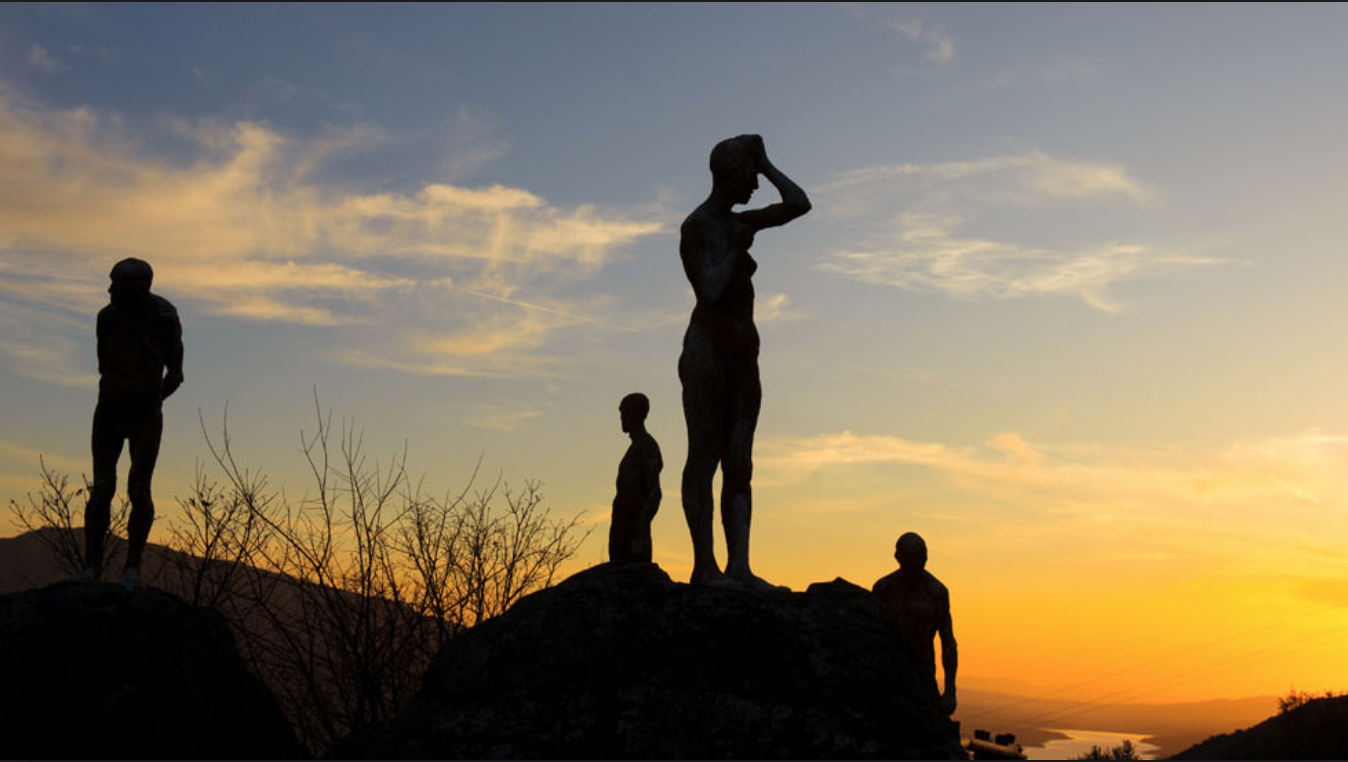 |
AuthorMatthew Carey is a documentary filmmaker and journalist. His work has appeared on Deadline.com, CNN, CNN.com, TheWrap.com, NBCNews.com and in Documentary magazine. |

- Home
- News
- Videos
-
Galleries
- 2019 Tribeca Film Festival
- Full Frame Documentary Film Festival
- 2019 SXSW Film Festival
- SXSW 2018 Gallery
- 2019 Sundance Film Festival
- Outfest 2018 Photo Gallery
- Outfest 2017
- Sundance 2018 Photos
- 2017 LA Film Festival
- 2017 Cannes Film Festival
- Tribeca Film Festival 2017
- SXSW 2017 Gallery
- 2017 Berlin Film Festival
- Sundance 2017 Gallery
- 2016 Los Angeles Film Festival
- Cannes Film Festival 2016
- SXSW 2016 Gallery
- Berlinale 2016 Gallery
- Sundance 2016 Gallery
- Filmmaker Gallery
- About
- Contact
 RSS Feed
Proudly powered by Weebly
- Home
- News
- Videos
-
Galleries
- 2019 Tribeca Film Festival
- Full Frame Documentary Film Festival
- 2019 SXSW Film Festival
- SXSW 2018 Gallery
- 2019 Sundance Film Festival
- Outfest 2018 Photo Gallery
- Outfest 2017
- Sundance 2018 Photos
- 2017 LA Film Festival
- 2017 Cannes Film Festival
- Tribeca Film Festival 2017
- SXSW 2017 Gallery
- 2017 Berlin Film Festival
- Sundance 2017 Gallery
- 2016 Los Angeles Film Festival
- Cannes Film Festival 2016
- SXSW 2016 Gallery
- Berlinale 2016 Gallery
- Sundance 2016 Gallery
- Filmmaker Gallery
- About
- Contact